Frederick Douglass unit
Redesigning a successful product requires discipline: preserve what made it powerful, respond to legitimate user concerns, and use the capabilities of a new platform to make the experience more consistent and effective.
Role: Senior Content & Instructional Specialist, Amplify
The context
For its Version 3 middle school ELA program, Amplify planned to revise an acclaimed Grade 8 unit built around Narrative of the Life of Frederick Douglass. I had written all of the version 2 content, and was now tasked with leading the revision. I’d need to determine what to preserve from Version 2 and how to rebuild the experience for a new digital platform.
The version 2 content had received glowing praise, but some teachers and districts also pushed back, feeling Douglass was inappropriate for eighth graders.

What I did
I was responsible for determining how much of version 2 to keep and which parts, and for building out the unit's focus on Douglass's rhetorical moves. I very closely supervised the lead writer through drafting, whether heavily revising lessons from version 2 or developing new lessons from scratch.
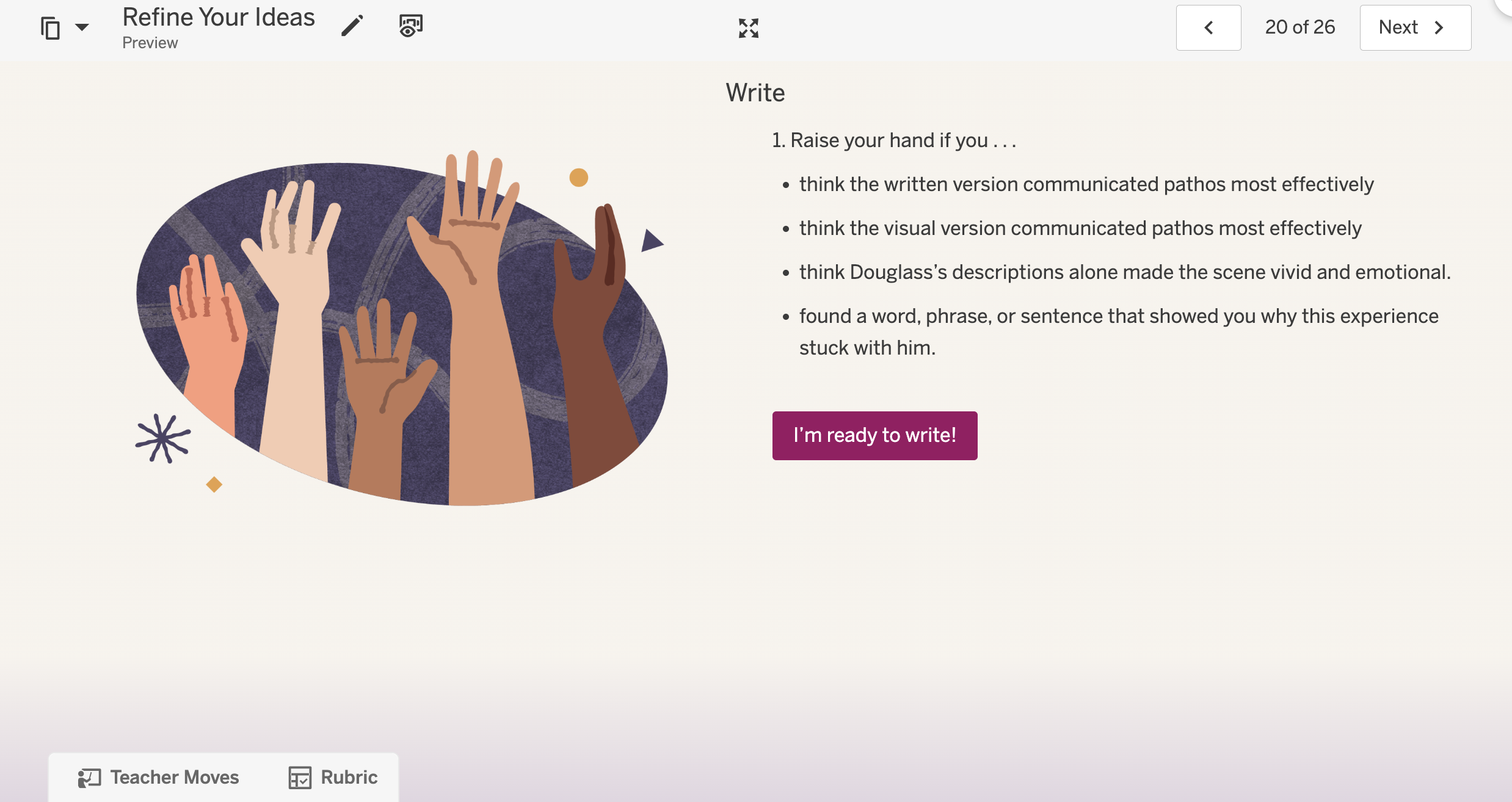
I rebuilt the unit around reusable Desmos Classroom routines that reduced cognitive load for students, created consistency for teachers, and made curriculum authoring more systematic. Desmos made digital interactions far more dynamic, fun, and engaging, and enabled interactive tools we didn't have on our previous in-house platform.
Challenges I faced
Districts were concerned about the violence inherent in a 19th-century narrative of enslavement. We did not want to censor Douglass or tell students and districts it was okay to skip parts of the book. The key difficulty was responding to those concerns without weakening the text or abandoning our responsibility as educators and curators of Douglass's legacy.
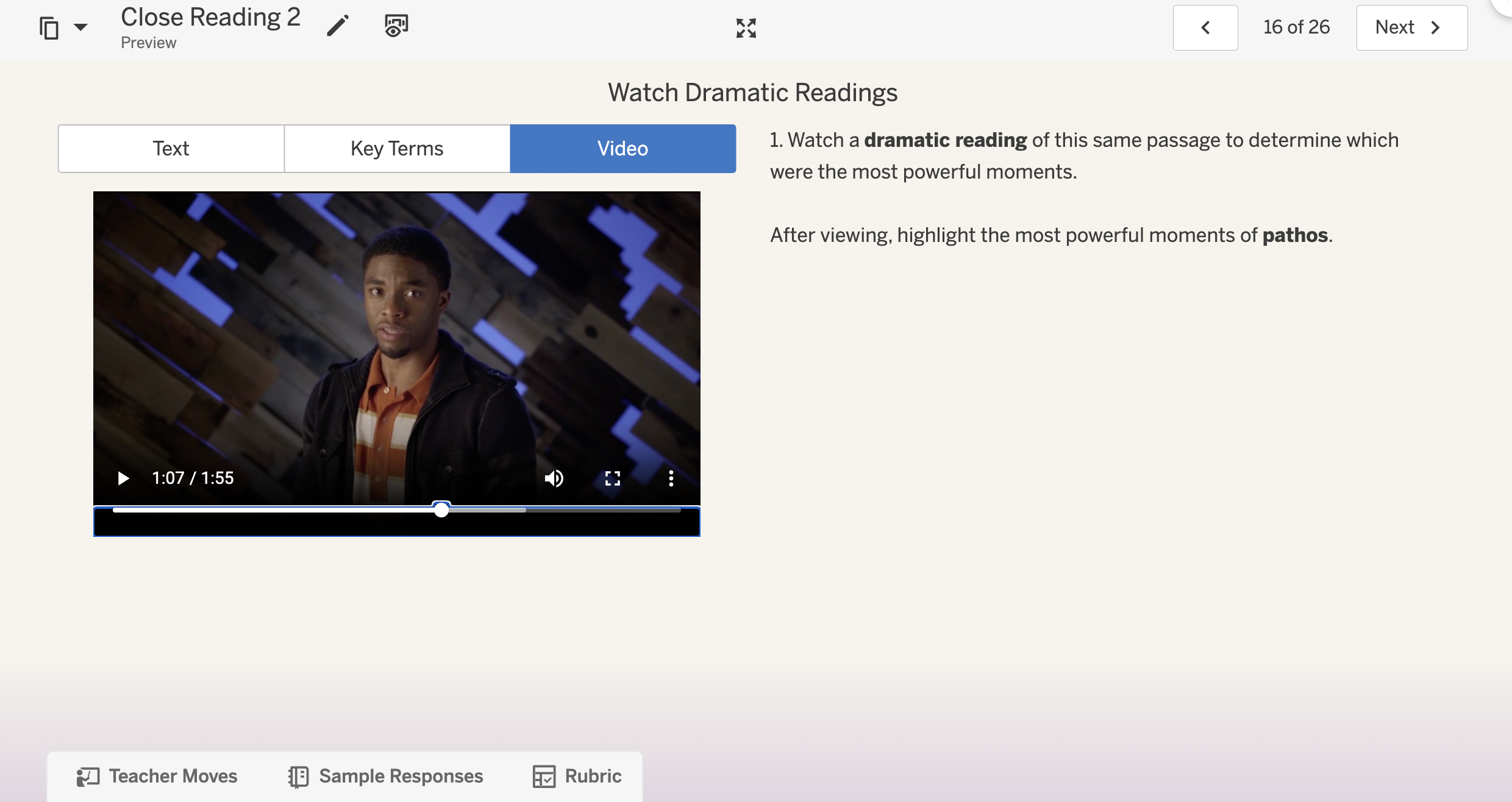
Our message to students and teachers stayed the same: read the whole book. What we could do, by way of compromise with legitimate concerns, was avoid focusing intently on particularly violent scenes. In version 2, students focused closely on Chadwick Boseman's gut-wrenching rendering of the Bloodstained Gate episode. In version 3, we cut that part of the dramatic reading because it was too intense for many eighth graders.
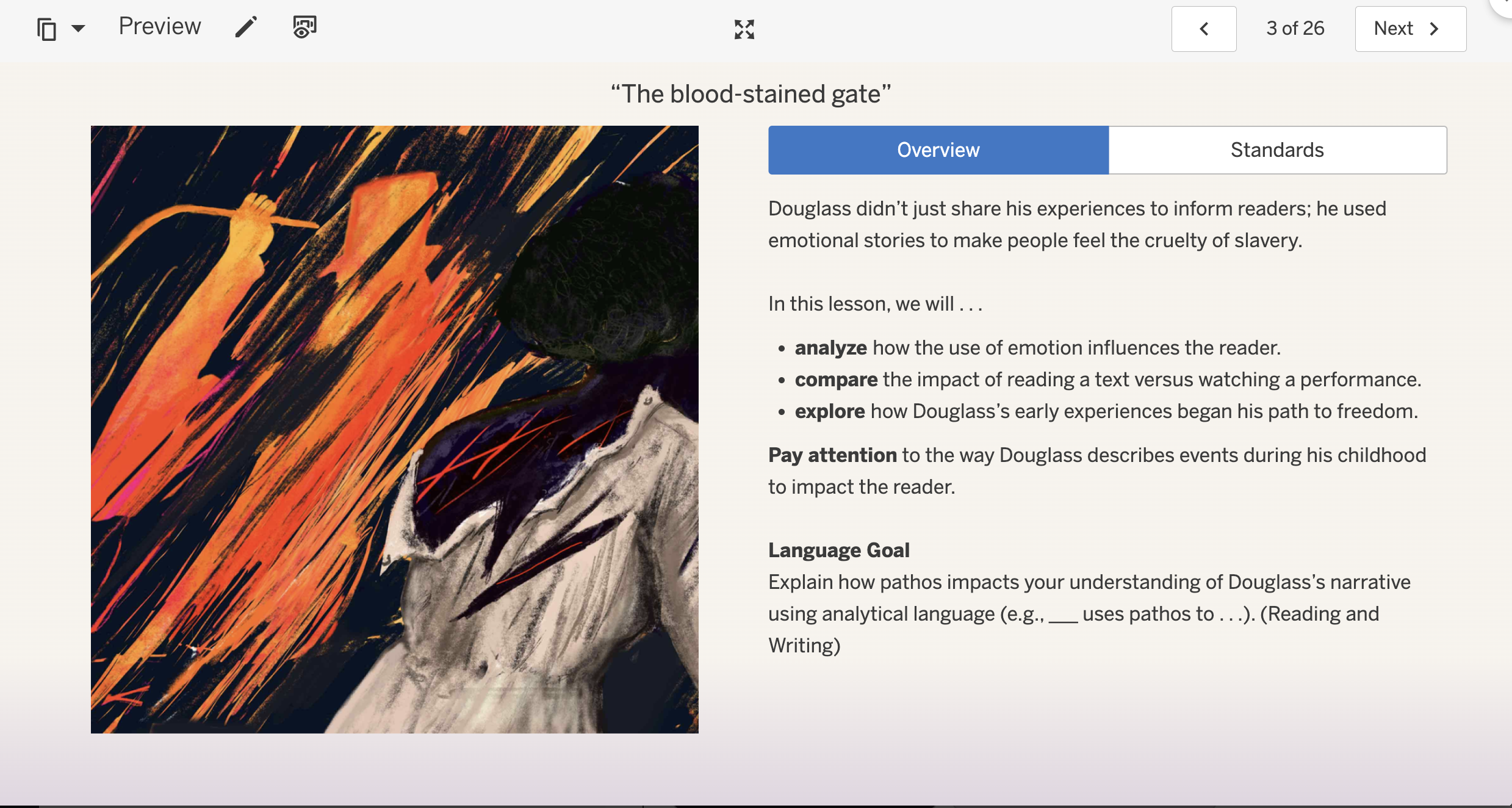
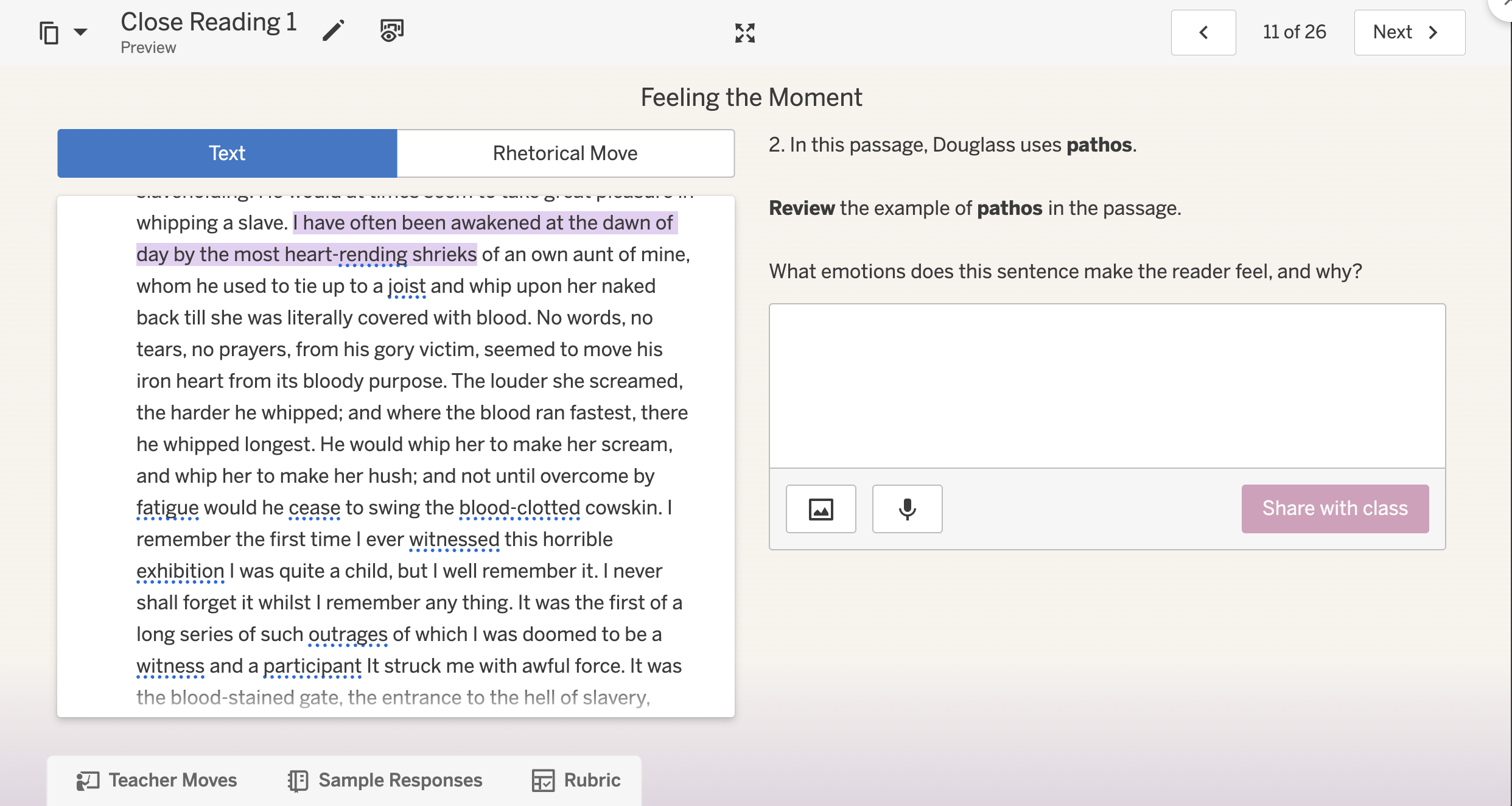
We also shifted the unit's focus to Douglass's rhetorical moves: how his choices served his purpose of helping audiences understand the suffering and injustice of American slavery, and their responsibility for dismantling it. With our digital interaction specialists, we created the Rhetorical Moves Journal, a digital notebook where students cataloged the moves Douglass made throughout the narrative. A mini routine guided them through recognizing each move, finding other instances in the text, and explaining how the move served Douglass's purpose in that passage.
The end result
The revised unit was accepted as part of California's version 3 adoption. We kept students reading the whole Narrative, answered district concerns through a shift in instructional emphasis rather than cuts, and rebuilt the experience on a more capable platform. The Rhetorical Moves Journal was developed with the interactions team as a reusable tool for future units.